
How Professional Instrument Setup Enhances Your Vintage Guitar's Sound and Playability
Updated: Jan 29
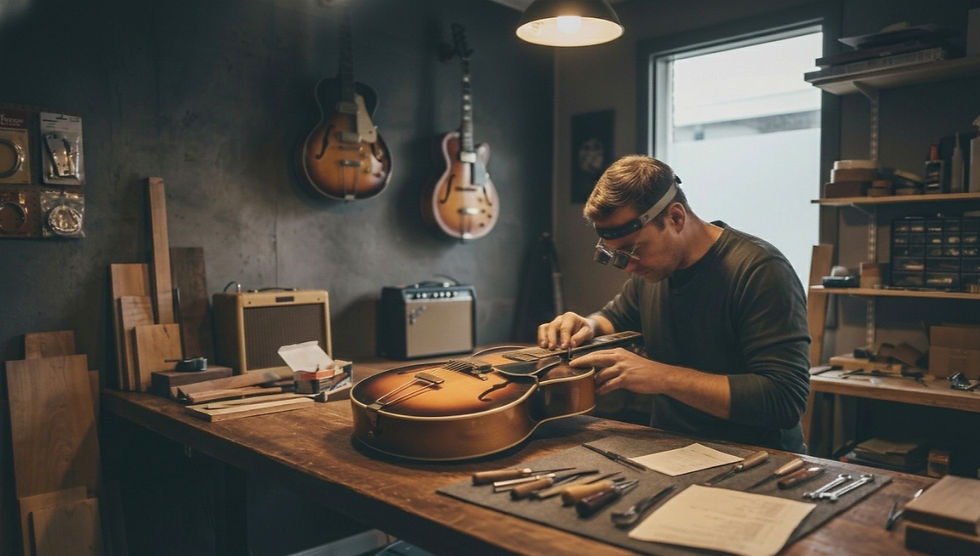
One autumn morning, I opened a battered case just arrived from a north Vermont estate, and the distinct scent of aged spruce filled the air—a fragrance both honest and elusive, mingled with decades of silence. Before me lay a 1930s flattop guitar. The tuners hung at odd angles; frets wore shallow divots; strings left rusted impressions behind the bridge plate. Its body looked tired, dulled by years of quiet storage, yet beneath the dust and checkered finish pulsed something unsettled. I pressed a single note and listened to its muted response—a sound not dead, only waiting, like an old voice forgotten in a crowded room.
This encounter uncovers what draws so many toward vintage stringed instruments: more than objects, they are vessels for memory, survival, and hope. Such guitars do not languish by accident; each bears marks of both affection and neglect—fingerprint wear beneath old chord shapes or faded initials carved by youthful bravado. For musicians, collectors, and families, these instruments promise more than valued artifacts—they hold fragments of musical history, aching to speak clearly once again given the chance.
Yet even the most storied guitar cannot sing or invite a gentle touch until its buried strengths are restored. The question is not whether these timeworn pieces deserve revival—it is how that revival honors their past while preparing them for new hands. What does it take for a professional setup, performed by experienced caretakers like those at Jimmy D's Vintage Instruments, to draw this voice back? Four decades traveling New England's backroads have taught me: technical skill must walk alongside respect—each adjustment is an act of responsibility as much as art. The journey from attic find to stage-ready companion calls for guidance that prizes transparency and reverence for history—the values at the heart of every instrument that finds sanctuary in my workshop.
From Attic Find to Stage-Ready: The Anatomy of a Professional Vintage Guitar Setup
The delivery of a time-worn 1950s arch-top stirs the shop with quiet anticipation. Its lacquer bears a worn shine, the truss rod cover is stained by decades of humidity, and the hardware is tired but intact. The first strum betrays the promise and the flaws: frets choke up past the seventh, the action stands high, and notes scatter sharp along the fingerboard's upper reaches. This scene sets the foundation for a true professional instrument setup - a practice that honors craftsmanship more than routine maintenance ever could.
Cleaning: Where Careful Hands Begin
Years of residue—dull fingerprints, smoke ingrained in nitrocellulose, hardened fretboard gunk - receive careful clearing using non-invasive materials. Gentle cleaning is more than cosmetic; preserved patina signals authenticity and must never be mistaken for neglect. At Jimmy D's, abrasive products stay off the bench. Every inch is hand-cleaned and—receive monitored for hidden damage or small fractures in brittle binding.
Fretwork: A Foundation for Voice and Play
Vintage fretwire reveals much about an instrument's working life. Leveling, dressing, or selective replacement is approached with a clear intent: maximize playability while preserving original metal if possible. Press-hardened frets from the 1950s behave differently than modern stock—the technique adjusts accordingly. Each crown and polish influences how fingers connect with tonewood, determining both intonation accuracy and tactile comfort. Documentation with video ensures transparency and offers owners insight into minor decisions behind every correction.
Neck and Truss: Respecting Age While Restoring Geometry
Wood moves over decades; truss rods corrode or seize. Adjustment is slow, and it communicates closely with Vermont's expert builders for advice on reluctant or idiosyncratic necks. Setting relief for a period-correct feel—neither too taut nor yielding—aligns with both factory data on vintage models and the guitar's evolved temperament after fifty winters and summers.
Nut and Saddle Work: Precision to Preserve Originality
Nuts cut high reduce playability, but filing them risks permanent compromise to valuable original parts. At Jimmy D's, each pass with nut files weighs tone transmission against replaceability and provenance. Saddles—especially in archtop or flattop bridges—undergo hand-fit adjustments rather than full replacements except where breakage dictates otherwise.
Intonation and Action: Craft Versus Routine
Intonation: Vintage bridge saddles nearly always split the difference between optimal pitch and unaltered parts. Temporary solutions (under-saddle shims or floating-compensated bridges) are often preferred over irreversible modification.
Action Height: Measured against both historical standards and modern player habits, action settings depend on purpose (studio work, restoration display, gig use). Fine-tuning respects the original fretboard radius and gentle top arches—elements easily ignored by mass-setup operations.
Electronics (on Electrics): Servicing with Integrity
Pots crackle and switches collect corrosion - sometimes just cleaning brings life back; other times leads must be re-soldered using period-appropriate wire to avoid unnecessary disruption. Every potentiometer twist is checked before consoles close; tone caps remain untouched unless proven faulty, preserving the soul recognizable by attentive ears.
A Collaborative Ethos Rooted in Vermont
Every step links Jimmy D's experience with a trusted network of Vermont luthiers known for their sensitivity to historic details—no procedure is taken lightly or without context from players' actual needs. Custom video documentation pulls back the curtain on each move made at the bench, reinforcing an ethic of transparency rare in vintage guitar maintenance. Each completed instrument returns to life not only playable but prepared for decades more music—the result of a restoration discipline rooted in both knowledge and reverence.
Setting the Stage: How Setup Choices Shape Tone, Feel, and Historical Character
The finest transformations I've witnessed have come by listening—to players, to the instrument in hand, and to its silent history. Consider the battered Martin D-18 that arrived with feathery top cracks and a warped bridge. Its owner, a flatpicker from Lake Champlain, had struggled for years against wolf notes and finger fatigue. Subtle adjustments revealed the guitar's buried sweetness: shaving the bridge just enough to return the action to 1950s bluegrass spec, coaxing neck relief back from the brink of collapse. These changes released warmth, nuance, and projection that had lain dormant beneath layers of wood movement. The same hands that first built this instrument would recognize its revived balance, even if the tunes have changed.
Instrument setup is a negotiation between eras and intentions. Jazz artists often bring hollowbodies whose wiring buzzes audible ghosts of smoke-filled clubs. On a recent ES-175, fret dressing became an archaeological act—removingspec and only enough divots to let melodic lines ring, while leaving the patina of decades untouched. Dialing in neck tilt and adjusting pickup height transformed each note into a brush stroke: smoother attack, truer pitch along the entire span of the fingerboard. The owner recognized chord shapes she'd set aside decades earlier—an intimacy renewed through careful instrument restoration Vermont luthiers cherish.
Setup Variables That Matter
Action: If set too high by a prior repair, expressive phrasing suffers; too low, and buzz overtakes tone. Dialing it in is tailored—a folk singer's gentle touch may need forgiveness at the first fret, while rockabilly strummers ask for a robust attack.
Neck Relief: Each neck tells a story; the truss rod records in tension or warp; managing this curve returns natural "give" under the left hand without imparting strain or dead spots.
Nut and Saddle: Height and slot width guide both intonation and sustain. On vintage guitars, even preserving a worn cattle-bone nut over swapping for new keeps original resonance alive for open strings.
String Gauge: A strategic change sometimes unearths harmonic overtones specific to period mahogany or maples—while always respecting when lighter tension protects fragile bracing.
Pickup Height (for electrics): Even a millimeter shift can brighten or muddy mid-century windings. Reverence here means referencing old catalogs—and no blanket prescriptions.
The real work lies in striking balance: enhanced playability never comes at the expense of a guitar's voice or honest wear. Every shop bench at Jimmy D's reaffirms that promise. We meet with players face-to-face or virtually before stringing up, sometimes letting them test among reference guitars until we decode their unspoken preferences together.
No two setups leave my care following mere recipes; each reflects empathy for musician and instrument alike. Professional instrument setup here becomes more than a technical checklist - it connects present needs with decades' worth of songs still resting beneath lacquered grain. Vintage guitar maintenance unfolds as stewardship. Hidden potential waits not in flawless appearance but in a guitar's invitation to be heard as it was meant to sound - then played in ways yet imagined.
Preserving Value, Protecting Legacy: Why Vintage Guitars Deserve Expert Setup
Time and fortune treat every vintage guitar differently—but one lesson echoes: original beauty and value rarely survive hasty repair or amateur interference. A Guild hollowbody crossed my bench last fall, its fretboard scalloped flat by someone chasing faster action. Some glue-hardened bridge pins hinted at an earlier rescue; mismatched tuners glinted where Grover once belonged. The instrument, now played with effort, lost its clarity above the 10th fret, and saw its market worth halved, reducing a once-coveted heirloom to a shelf-bound cautionary tale. Stories like this arise far too often—each shares a root cause: neglect of proper setup and intervention performed without informed restraint.
A professional instrument setup addresses more than convenience for the next session; it stands as a defense against long-term injury—both mechanical and historical. Under-strung necks, rapid truss rod adjustments, and careless part swaps bring fast results but slow harm: changes in neck profile become uncorrectable, stress-induced cracks widen with each Vermont winter, and original bridge plates vanish beneath quick-fix overlays. Collectors and serious musicians know that the first question asked about a vintage guitar isn't just "how does it play?" but also "what has been altered?" Honest provenance commands higher respect—and value—than thinly veiled repairs.
The Risks of Improper Care
Truss Rod Tinkering: Forceful adjustments or use of lubricants without necessity often seize threads or fracture vintage walnut fillers. Resulting relief issues haunt playability for decades and can render necks unserviceable.
Parts Replacement: Surge-swapping bridges, saddle inserts, or tuner buttons from mismatched eras leaves instruments both awkward to play and out-of-step with collector standards. Authentic tone depends on original wood and metallurgy interacting as designed.
Climate Blindness: In New England, swings in humidity spell disaster for thin plates and hide glue joints. Lack of local knowledge means warped tops or weather-cracked finishes—a fate sealed in attics and hastily heated studios alike.
Why Reversible Expertise Matters
At Jimmy D's, interventions remain reversible whenever feasible—out-of-circuit cap swaps saved in marked bags, nut shims fitted rather than routed away, and finish work left to stabilize rather than cover scars. Every element is weighed: if preserving an original saddle will cost a fraction in intonation but maintain historical truth, the choice leans toward conservation. For estate sellers especially, untouched originality guides inheritance value years down the line.
This commitment carries through our business model. Each restoration proceeds with before-and-after images available for review, alongside exhaustive condition descriptions - a promise seldom seen among national online outlets or hurried small-town shops. Buyers receive not just an instrument but proof of its history and care trajectory; condition-led video clips highlight both the sound's return and the integrity of repairs made (or wisely avoided).
The Vermont Advantage: Regional Trust & Insight
New England's unique blend of climate extremes and deep estate holdings demand vigilance that distant shops overlook. Generation-old guitars emerge from barn lofts near Lake George or humid cellars off Route 7; each venue leaves marks a local eye can read. Jimmy D's extends its experience—coordinating with luthiers statewide—to protect these finds as they're reintroduced to music rooms around the region or shipped to enthusiasts nationwide.
Treating professional instrument setup as an essential investment—and not a mere routine—becomes an act of stewardship. This conserves not just tone or playability but the very legacies entrusted in spruce tops and pearl inlay. A guitar stands as testimony; done well, restoration assures its voice continues telling stories for generations yet to play them.
Custom Setups, Personal Journeys: Tailoring the Experience for Each Musician and Collector
The bond between musician and vintage guitar is always personal—guided by memory, purpose, and tactile nuance. On any given day at Jimmy D's, the counter becomes a place for stories first, measurements second. One collector from Bennington arrived with his grandfather's Harmony archtop, uncertain if it belonged in a case or on a stage. He traced patterns on the worn finish while explaining how each scratch recalled family gatherings. Through steady back-and-forth—listening for both intent and expectation—I found that his dream was not museum preservation but restoration for gentle living room sessions.
Each instrument tells me what work will serve not only preservation but playability shaped by its owner's touch. The slow arch of conversation forms the blueprint for every setup: a touring jazz guitarist might ask for lower action and precise intonation to enable swift phrasing, while a fingerstyle player discusses string gauge and bridge height to allow for nuanced dynamic shading. I keep reference guitars on hand; sometimes the best solutions emerge after letting folks sample everything from braced dreadnoughts to lightly-built parlor guitars. Preferences sharpen against real felt experience, not guesswork.
Setup as Collaboration: No Two Paths Alike
Tonal Tailoring: Some collectors care about period-accurate tone; swapping in flatwound strings or nickel-plated wound sets can restore the character of swing-era electrics or folk dreadnoughts alike.
Action and Feel: Adjustments respect genre and physical need - whether chasing Larry Carlton bends or gentle old-time melodies. A banjo stylist recently requested a higher saddle for banjo-inspired snap, reinforcing how diverse tastes steer benchwork.
Dialogue Over Dictation: Input shapes outcome—from neck relief preferred by arthritic hands to capos tested for easy chord changes in front-porch settings.
Remote Approval: For clients across Vermont or distant coasts, detailed video demonstrations accompany every completed setup, offering an honest earful before instruments ship out. Nothing leaves until satisfaction rings clear, be it through headphones or hands.
Special requests never find their way to the dustbin—even custom pickguard materials or unorthodox string gauges earn full consideration if they align with an instrument's long-term health. By engaging directly—never relying on mail-in forms or impersonal ticket systems—I ensure each owner understands not just what changes were made, but why those choices support soundness and value.
The reward most often heard from musicians is relief—that familiar curve of neck now sits gently beneath their fingers; chords return to muscle memory; resonance comes alive after seasons of silence. Collectors remark on the transformation: a wall-hung relic becomes a loved and lively companion again. Through transparent restoration practices that emphasize communication rather than one-size-fits-all service, Jimmy D's has quietly become more than a local restorer of boxes and strings. Each guitar leaves the shop having bridged its history with its player's present ambitions—and I extend the same mindful welcome to anyone safeguarding family instruments or seeking undiscovered voices across New England's rolling hills and well beyond.
From Vermont Workshop to Your Hands: The Jimmy D's Difference in Vintage Setup
Few things compare to the late afternoon light through the windows at Jimmy D's workshop in Rutland: old-growth spruce giving up its scent as a brace is reglued, sun tracing the grain of a once-forgotten maple back so its beauty feels inevitable. This place holds more than tools and tonewoods—it preserves the quiet patience at the heart of professional instrument setup. Neighbors drop in for a chat or bring dusty cases from north country attics; visitors drive down winding roads hoping for an honest appraisal or simply to listen as someone picks a decades-old melody on a newly revived guitar.
The regional landscape shapes not only what comes in the door but how each instrument is approached. Sourcing treasures from estate-rich backroads and historic collections throughout New England, I work with colleagues across seven states so that rare models—sometimesbut also hiding in a West Mass barn or behind church lofts in New Hampshire—find their way here before being lost to neglect or parted out online. There is discipline in this network: every find undergoes full inspection, with no corners cut during bench time. Video records of each stage, from the initial crackling open of a case to the final strum after adjustment, document both what has been changed and what has wisely been left alone. Clients reflect on these choices and say they trust what comes from my shop because "you can see he treats it like it belonged to his own family."
Trust and Transparency, Rooted in Vermont
Honest Appraisals: Clear, plain evaluation before restoration—whether you're considering selling, insuring, or learning an instrument's story. No inflated promises; each instrument's strengths and scars are made plain.
Video Demonstration on Every Sale: Hear and see your guitar played on camera - no surprises upon arrival. Many tell me these videos offer reassurance that high-gloss listings elsewhere cannot.
Custom Sourcing: I travel for specific requests—tracking favored models from closed conservatories or families downsizing after generations.
Flexible Payment and Accessibility: Entry-level pieces for students priced with honesty and transparency; established collectors benefit from layaway options and open communication throughout acquisition.
Charity and Community: Instruments are regularly donated to support school music programs or local fundraisers—because preservation matters most when it returns music to the community.
Testimonials surface in gentle ways: two parents wrote after their daughter took home her first vintage student guitar, describing "a sound that filled the house with songs her grandmother used to play." A traveling jazz artist from Maine called after a gig to share that "the feel was exactly what I remembered from my uncle's old ES - finally playable again, just as it should be." These moments confirm why painstaking attention matters more than turnover or flash.
The workshop stands as a bridge between the past of every instrument rescued from disuse and the future hands who will draw music from it again. Whether seeking setup guidance, searching for a forgotten gem, or preparing to pass along a collection with dignity, consider Jimmy D's Vintage Instruments your advocate for musical inheritance. The door remains open for conversation; every instrument still waiting for its song deserves nothing less.
Old guitars deserve to sing with clarity and ease—not just for this season, but for a lifetime of players to come. The right professional setup opens their full character, whether you've uncovered a family heirloom or found a battered classic tucked away in a roadside barn. Treated with informed adjustment and watchful hands, these instruments reward patience with voices older and richer than most new builds can offer.
At Jimmy D's Vintage Instruments in Rutland, every consultation starts with respectful listening—first to your story and your instrument's story, then to wood and wire beneath strong lighting. If you wish to book a setup, request restoration, or seek out rare models, contact is welcome by phone or email. In the coming months, we'll introduce online scheduling features to make connecting more convenient wherever you're based. No matter how you reach out, thoughtful dialogue is part of the process: bring questions about video demonstrations, custom setups, or condition assessments without hesitation. Special requests—from precise period-correct restorations to simple playability tweaks—are honored as part of this ongoing Vermont-born ethos.
Every vintage guitar carries unique memories and potential waiting to be awakened—or preserved for future hands. Investing in skilled care reflects both personal respect for your instrument and genuine stewardship of musical heritage. Whether in New England's small towns or far beyond, know that honest expertise stands ready at Jimmy D's to help you honor those fragile links between past inspiration and new songs yet unwritten.

Comments